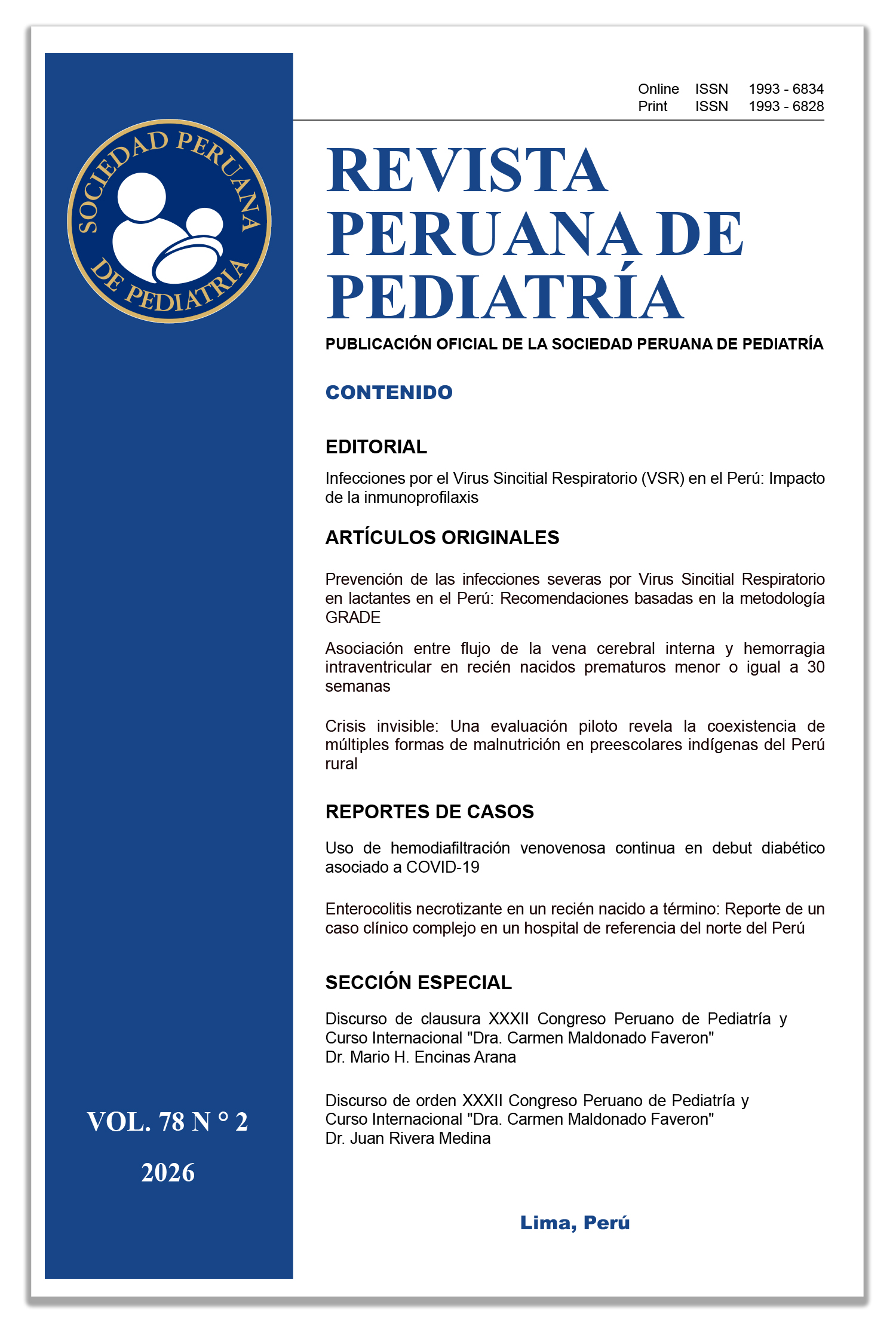
INVISIBLE CRISIS: PILOT ASSESSMENT REVEALS OVERLAPPING MALNUTRITION IN INDIGENOUS PRESCHOOLERS OF RURAL PERU
DOI:
https://doi.org/10.61651/rped.2026v78n2p24-31Keywords:
Indigenous population , nutritional status , malnutrition , preschool child, PeruAbstract
Introduction: This pilot case study addresses a knowledge gap in the comprehensive nutritional assessment of children in remote indigenous communities of Peru – communities where existing nutritional surveillance programs seldom reach and where evidence on the coexistence of multiple forms of malnutrition remains scarce. Objectives: The objective of this study is to assess the nutritional status (including anemia and anthropometry), feeding practices, and food sourcing among children (n=12) aged 3-6 years attending a pre-kindergarten program in the high-altitude Maras district of Cusco, Peru. Methods: Our protocol included altitude-adjusted hemoglobin assessment, anthropometric measurements (weight and height), 24-hour dietary recalls, direct observation of food preparation, and food source mapping. Traditional surveillance programs rarely reach geographically isolated indigenous communities, and even less frequently apply multidimensional assessments capable of capturing the coexistence of undernutrition and overnutrition – both of which were documented in this study. Results: Findings reveal multiple coexisting forms of malnutrition: 58% of the participants presented anemia, one third showed stunting, and another third were overweight. Notably, 25% presented with simultaneous anemia and stunting, and 14% with concurrent anemia and excess weight, prevalence rates higher than the national average. Although caloric intake was adequate (122.6% of requirements), the dietary pattern showed qualitative deficiencies, characterized by low iron bioavailability and limited consumption of animal-source foods. Conclusions: This study documents the coexistence of stunting, anemia, and excess weight among preschool children in a remote indigenous community of the high-altitude Maras district, while demonstrating the necessity of multidimensional nutritional assessments in remote indigenous communities.
Downloads
Downloads
Published
How to Cite
Issue
Section
Categories
License
Copyright (c) 2026 Angeline Gonyea, Krysty Meza Carbajal, Reyna Liria-Domínguez, Malena Martínez

This work is licensed under a Creative Commons Attribution 4.0 International License.
Authors will retain the copyright and grant the right to publish their work in the journal while allowing third parties to share it under the Creative Commons Attribution license.
Articles are published under a Creative Commons license that allows sharing and adaptation with appropriate credit. CC BY 4.0 license. Available in English at https://creativecommons.org/licenses/by/4.0/
Authors may use other information disclosure formats as long as the initial publication in the journal is cited. The dissemination of the work through the Internet is recommended to increase citations and promote academic exchanges.
The published content does not necessarily reflect the specific point of view of the journal, and the authors assume full responsibility for the content of their article.